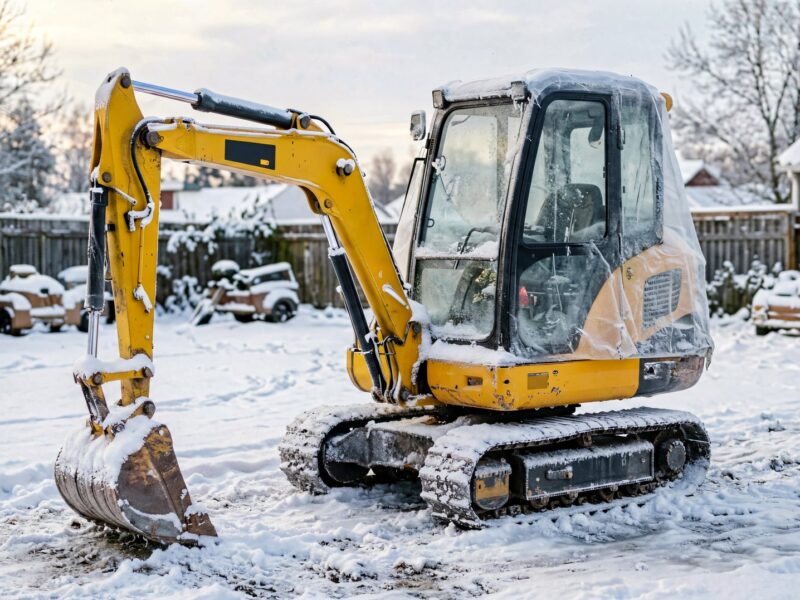
The undercarriage accounts for 15–25 percent of a mini excavator’s total value, yet it is the most neglected component on most machines. A set of rubber tracks for a 1.8 ton machine costs $800–$1,800; idlers, sprockets, and rollers can add thousands. Correct tension and routine cleaning can easily double undercarriage life.
Here is the maintenance program that protects your investment in CYD-class compact excavators.
Why the undercarriage wears
Undercarriage parts wear from three things: ground contact, abrasive materials (dirt/sand packing), and incorrect tension. Most wear happens on the bottom side, which is why operators rarely see it until components fail.
Measuring track tension
The rule: track sag should be about 10–20 mm (0.4–0.8 in) measured at the midpoint between the front idler and the top carrier roller, with the machine lifted off the ground.
| Machine | Sag target |
|---|---|
| 0.8–1.0 ton | 10–15 mm |
| 1.8–2.5 ton | 15–20 mm |
| 3.5 ton compact | 20–25 mm |
Too tight: excessive heat, faster sprocket and bearing wear. Too loose: track slaps, comes off, damages the frame.
Daily and weekly care
- Clean the undercarriage after muddy or sandy jobs — packed material grinds like sandpaper
- Check tension each week and after unusual work
- Look for uneven wear on tracks, sprocket teeth, and rollers
- Inspect grease fittings on idlers and rollers; replace leaking seals promptly
Wear indicators
- Sprocket teeth: hooked or knife-edged teeth mean the tracks are slipping or worn
- Track grouser height: compare to spec — smooth grousers lose traction and speed
- Roller and idler flat spots: indicate seized bearings or overloading
- Uneven track wear side to side: points to a misaligned or damaged frame
Rubber vs steel tracks
Rubber tracks are standard on machines under 2.5 tons and protect finished surfaces. Steel tracks last longer on abrasive ground and are better for demolition and rocky sites. Match the track to your main work surface — switching is an option on most platforms.
Expected undercarriage life
| Condition | Rubber track life |
|---|---|
| Soft dirt, careful use | 1,200–1,800 hours |
| Mixed surfaces | 800–1,200 hours |
| Gravel/concrete, heavy use | 500–800 hours |
FAQ
How do I know when mini excavator tracks are worn out?
When grouser height drops below spec, when cracks appear, or when the machine drives unevenly. A simple measurement with a ruler against the grouser height spec in the manual settles it.
Can I replace just one track?
Yes, but replace both sides together if the pair is near end of life to keep drive characteristics even.
What is the cheapest way to extend undercarriage life?
Keep the undercarriage clean, maintain correct tension, and avoid spinning the tracks under load. These three habits are free and add hundreds of hours of life.
Service costs add up fast — see the full maintenance schedule and compare undercarriage options before your next machine decision.