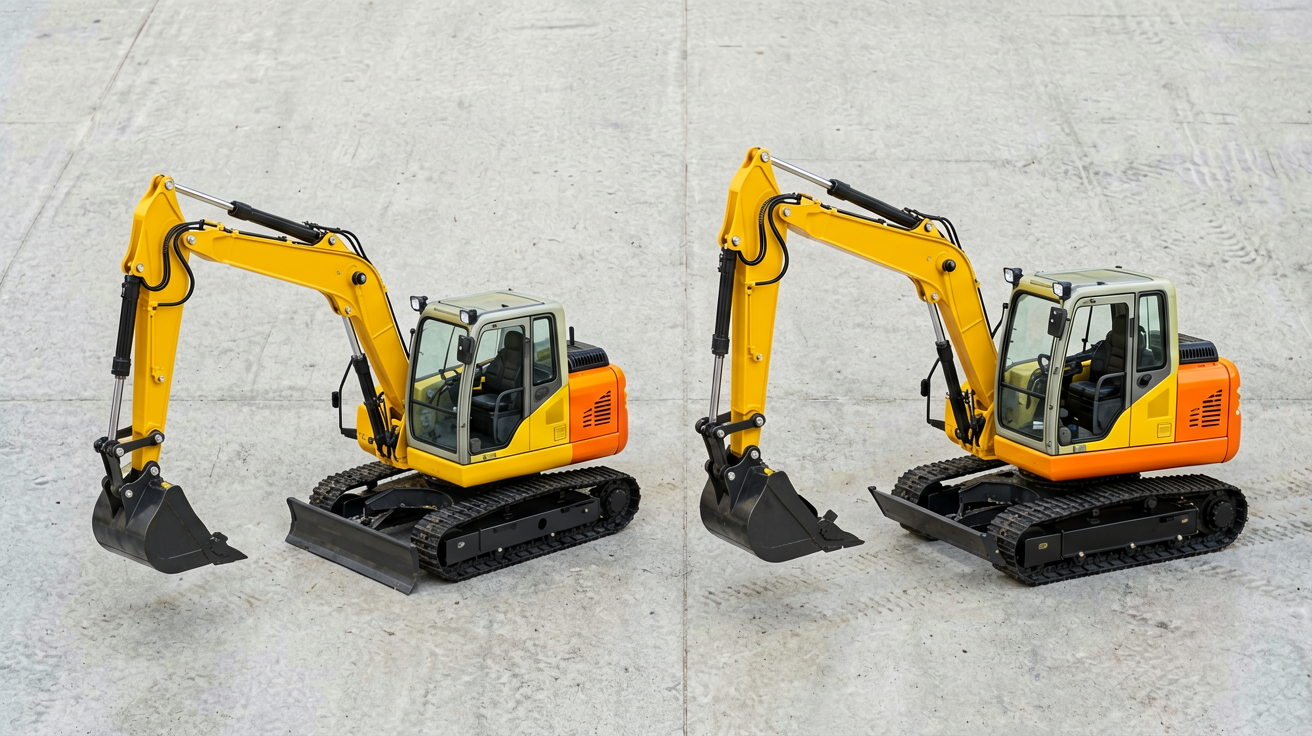
For drainage and utility trenching, the spec that matters most is dig depth — you need a machine that reaches 600–900 mm below the trench floor to bottom out a pipe run. In the mini class, a 1.8 ton machine with 2.3 m dig depth handles most residential drainage; deeper commercial work needs a 2.5–3.5 ton machine.
Here are the specs and techniques for trenching with a compact excavator.
Dig depth by machine class
| Machine | Dig depth | Typical trench work |
|---|---|---|
| 1.0 ton micro | 1.8 m | Shallow drains, irrigation |
| 1.8 ton (CYD-18) | 2.3 m | Residential drainage, most utilities |
| 2.5 ton (CYD-25) | 2.7 m | Deeper drains, gas/water mains |
| 3.5 ton compact | 3.1 m | Commercial trenching, sewer runs |
Rule of thumb: you need dig depth roughly equal to the trench depth plus the machine’s own sitting height. A machine rated at 2.3 m dig depth comfortably cuts a 1.2–1.5 m deep trench.
Choosing the trenching bucket
- Use a narrow trenching bucket (200–400 mm) matched to pipe width
- Keep bucket width slightly wider than the pipe to allow bedding and backfill
- A bucket with a smooth interior releases wet clay more easily
Trench safety fundamentals
- Slope or shore trenches deeper than 1.2 m (4 ft) in unstable soil
- Keep spoil at least 600 mm back from the trench edge
- Never work under an unsupported trench wall
- Have a spotter when working in blind areas near the machine
Trench collapse is the leading fatal hazard in excavation — follow your local standards, typically OSHA 1926.651/652 equivalents.
Efficient trenching technique
- Cut a pilot trench to the run’s start
- Dig in short sections, keeping the spoil on one side
- Grade the trench floor with a slight fall for drainage
- Lay bedding, pipe, then backfill in layers
Pipe and bedding specifications
Trench dimensions follow the pipe being installed:
| Pipe type | Trench width | Min depth to invert |
|---|---|---|
| 100 mm drainage | 300–350 mm | 600–800 mm |
| 150 mm sewer | 350–400 mm | 750–1,000 mm |
| 200 mm stormwater | 400–450 mm | 800–1,200 mm |
| Utility cable duct | 200–300 mm | 450–600 mm |
Provide 100–150 mm of granular bedding below the pipe and place spoil at least 600 mm from the edge for trench safety.
FAQ
What is the minimum trench width for a mini excavator?
With a narrow trenching bucket, 200–250 mm is feasible. Most drainage work uses 300–450 mm trenches.
How deep can a 1.8 ton mini excavator dig?
About 2.3 m maximum — enough for most residential drainage. For deeper or larger work, use the 2.5 ton or 3.5 ton class.
Do I need to bench or slope a 1.5 m trench?
In stable soil, 1.5 m is borderline; check local regulations. In any soil with a collapse risk, slope or shore the trench.
See how a compact excavator wins residential jobs and request a trenching-configured machine.