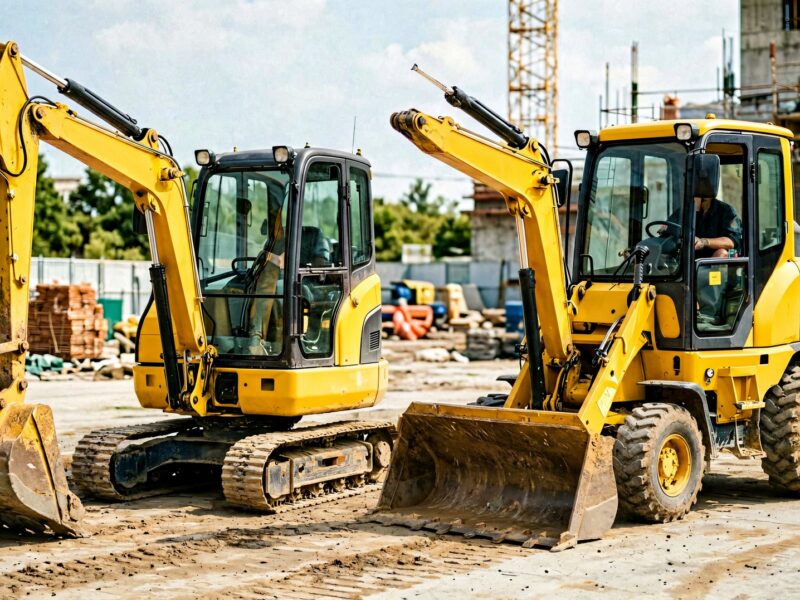
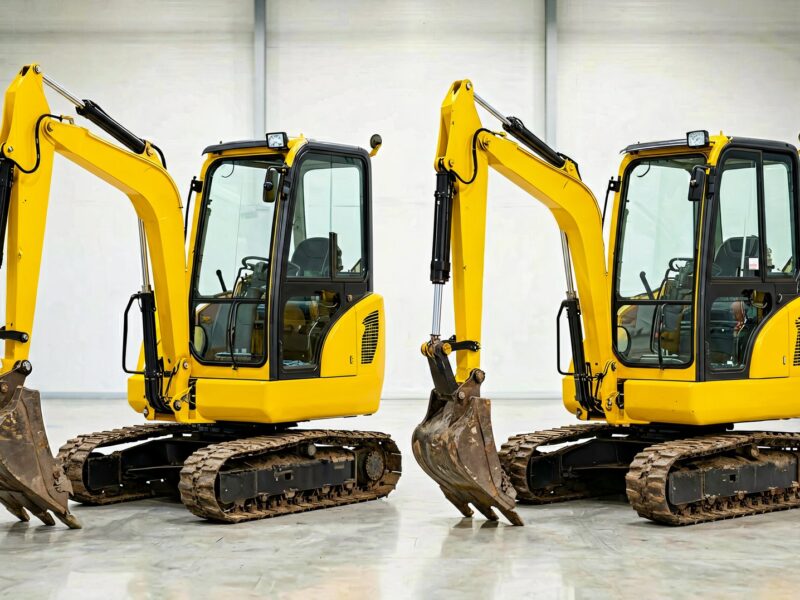
If you work in tight spaces, a zero-tail mini excavator swings its upper structure inside the width of the tracks, while a conventional (short-tail) model overhangs the tracks when it rotates. Zero-tail machines dominate residential, utility, and urban work; conventional machines win where reach, stability, and lifting strength matter more than clearance.
This guide compares the two designs across swing radius, digging performance, safety, price, and real job fit so you can buy the right platform the first time.
What “tail swing” actually means
The swing radius is the distance from the machine’s center pin to the back of the cab or counterweight.
- Zero tail swing (ZTS): the rear of the upper structure stays inside the track width when rotating. A 1.0 ton ZTS machine like the CYD-10 can rotate beside a wall or curb without striking it.
- Conventional / short tail: the rear swings beyond the track footprint. The counterweight extends rearward, which improves digging force and balance.
A practical way to measure the difference: a zero-tail 1.8 ton machine can spin full circle within a roughly 2.2 m radius, while a conventional 1.8 ton machine needs closer to 2.6 m of clear space.
Zero-tail advantages
| Benefit | Why it matters |
|---|---|
| Safer in congested areas | The tail never strikes workers, walls, or parked equipment |
| Better for sidewalk & road work | Work within a single lane without blocking traffic |
| Easier indoor demolition | Rotate freely against interior walls |
| Lower operator stress | No need to “watch the tail” constantly |
Rental operators often standardize on zero-tail units because their machines go to unknown job sites, many of them residential backyards.
Conventional (short-tail) advantages
- More reach and dig depth for the same machine weight, because the counterweight lets the boom work harder.
- Higher lifting and breakout force — useful for lifting pipes, pulling stumps, and handling buckets close to capacity.
- Often cheaper to buy for an equivalent tonnage, and maintenance access to the engine is usually simpler.
Conventional machines shine on farms, open-site construction, and utility trenches where clearance is not a constraint.
Compare by tonnage
| Class | Best choice | Why |
|---|---|---|
| 0.8–1.0 t (micro) | Zero-tail | Used in greenhouses, backyards, tight landscaping |
| 1.8–2.5 t | Either | Depends on site access vs. reach needs |
| 3.5 t (compact) | Conventional | Longest reach, best stability for rental fleets |
Making the call
Choose zero-tail if more than half of your work is in enclosed or congested spaces. Choose conventional if you prioritize dig depth, lift capacity, or purchase price, and your sites have room to swing.
Whichever direction you go, match the tonnage to your typical jobs before worrying about tail design. A machine that fits your sites but is the wrong size will cost you productivity either way.
FAQ
Is a zero-tail mini excavator less stable?
Not necessarily. Stability depends on track gauge, counterweight design, and operating weight, not tail style. Good zero-tail machines use deeper counterweights to keep lift performance close to conventional models.
Do zero-tail mini excavators cost more?
Generally yes — the compact swing mechanism and counterweight engineering add a small premium, typically 5–10 percent at the same tonnage.
Can a zero-tail machine dig as deep as a conventional one?
At the same operating weight, conventional machines usually offer slightly more dig depth and breakout force. The difference narrows as machines grow, which is why many 3.5 ton platforms are conventional.
If you are evaluating specific models, compare the full CYD range side by side, then request factory pricing for the class that fits your work.